
If you've ever tried to get stronger while recovering from surgery or dealing with tendon pain, you know how tough it is. Heavy lifting usually puts too much stress on the area that's healing.
At JointWorks PT, serving Central Massachusetts and the MetroWest area, we use Blood Flow Restriction (BFR) Therapy to help patients build strength and muscle using only 20-30% of their normal load. It's a smart way to get stronger without aggravating pain or slowing recovery [1].
What Is Blood Flow Restriction Therapy?
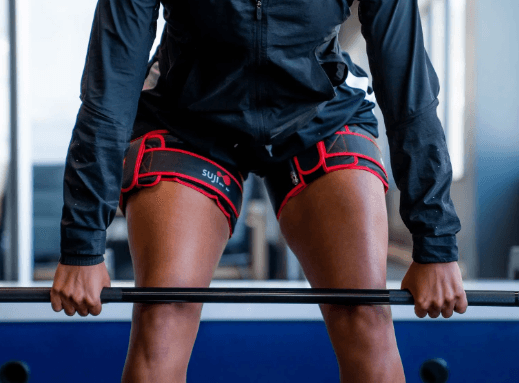
BFR Therapy uses an inflatable cuff or band placed around your arm or leg to gently limit blood flow while you exercise. Blood can still get in, but it leaves more slowly. This makes your muscles think they're lifting heavier weights than they really are.
The result: your body responds the same way it would to heavy lifting, building muscle and getting stronger, without the pain or stress on your joints [4].
Who Can Benefit from BFR Therapy?
BFR Therapy is ideal for anyone who wants to build strength safely or save time with a concierge-style approach.
You may benefit if you have:
Tendon pain: BFR helps strengthen painful tendons like the Achilles, kneecap tendon, or rotator cuff. One study found big improvements in pain and strength for tennis-elbow patients using BFR training [3].
Post-surgery recovery: After ACL, rotator cuff, or hip surgery, BFR helps maintain muscle strength before heavier loading is safe [1].
Busy schedules: For those who value convenience, we bring the full JointWorks experience to your home: no travel, no gym, no waiting.
How BFR Works at JointWorks PT
At JointWorks PT, BFR Therapy is part of a full-service, one-on-one session built around your goals.
1. Comprehensive Assessment
We start with a detailed evaluation of your strength, movement, and comfort. This helps determine whether BFR Therapy is right for you.
2. Customized BFR Exercise Program
We place the cuff, set the correct pressure, and guide you through light exercises (usually 20-30% of your max). Despite the low load, your muscles work hard. Studies show that BFR training builds strength and muscle similar to traditional lifting [2] [6].
3. Integrated Treatment
BFR Therapy pairs perfectly with:
- Hands-on therapy: Joint and soft-tissue work to reduce stiffness and pain.
- Rehab exercises: Range-of-motion and real-world movement training.
- Education: Guidance on safe activity and home exercises.
This mix builds strength while improving movement and confidence.
What to Expect
Most patients notice progress within a few weeks.
Typical timeline:
- Weeks 1-2: Very light loads, learning proper form.
- Weeks 3-4: More exercise variety and slightly higher effort.
- Weeks 5-6: More complex movements and continued gains.
- After 6 weeks: Gradual return to traditional strength training.
Each in-home session lasts a full hour. We combine BFR Therapy, hands-on care, and exercise so you can recover faster in the comfort of your own home.
Safety and Considerations
BFR Therapy is safe when performed by a trained clinician who sets proper pressure and monitors you throughout the session. Studies show no higher risk of side effects than regular exercise [5].
You may need to avoid BFR Therapy if you have:
- Blood-clotting disorders
- Severe heart disease or uncontrolled blood pressure
- Open wounds near the treatment area
- Pregnancy
Before starting, we review your medical history to be sure it's safe and effective for you.
Why Try In-Home BFR Therapy?
- Save time: Skip the commute. We bring the session to you.
- Concierge care: Private, one-on-one treatment with Dr. Lagasse.
- Faster strength gains: Build muscle without stressing healing tissues.
- Real-world results: Train in your own environment for better carryover to daily life.
Rebuild Strength Without the Strain
If heavy lifting causes pain or you're recovering from surgery, BFR Therapy at JointWorks PT can help you rebuild strength safely and efficiently.
Schedule a free consultation to learn how this proven technique (combined with manual therapy, exercise, and education) can help you move, perform, and feel your best.
References
- Lorenz S et al. Blood Flow Restriction Training. PMID 34530434. PubMed
- Wortman RJ et al. Blood Flow Restriction Training for Athletes: A Systematic Review. PMID 33196300. PubMed
- Karanasios S et al. Low-Load Resistance Training with Blood Flow Restriction Is Effective for Managing Lateral Elbow Tendinopathy. PMID 36099170. PubMed
- Martin PM et al. An Overview of Blood Flow Restriction Physiology and Applications. PMID 35394953. PubMed
- Anderson KD et al. Overall Safety and Risks Associated with Blood Flow Restriction Training. PMID 35284924. PubMed
- Labata-Lezaun N et al. Effectiveness of Blood Flow Restriction Training on Muscle Strength and Physical Performance in Older Adults: A Systematic Review and Meta-analysis. PMID 35026149. PubMed