You have probably seen cupping before. Maybe at the Olympics, where athletes walked around with those distinctive circular marks on their shoulders. Or maybe at a spa or wellness center, where cups sit on your back while you relax. Functional cupping is related to those approaches, but it works very differently.
At JointWorks PT, I use functional cupping as a hands-on treatment tool, not a passive relaxation technique. The key difference is movement. Instead of just placing cups and waiting, I combine suction with active stretches and exercises. This approach addresses tight tissue, restricted movement, and pain in ways that traditional cupping simply cannot match.
How Functional Cupping Works
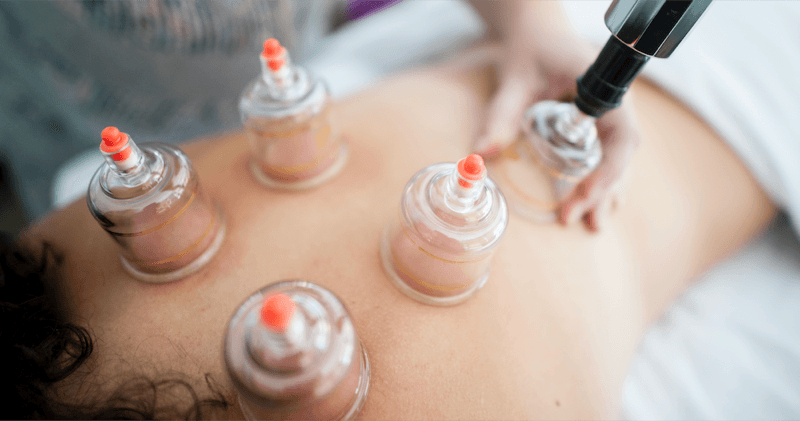
The basic idea behind cupping is suction. A cup creates negative pressure on the skin, which lifts the tissue underneath. This pulls blood flow into the area [1], separates layers of tissue that may be stuck together, and creates space for movement.
Traditional cupping stops there. The cups sit in one spot for several minutes while you lie still. Functional cupping takes that foundation and adds the element that makes it truly effective: movement.
Here is what that looks like in practice. Say you have a tight upper back that limits how far you can rotate. I place cups on the restricted area to lift and separate the tight tissue layers. Then, while the cups are in place, I have you actively rotate your trunk, reach overhead, or perform other movements that challenge the restricted range. The suction holds the tissue in a lengthened position while your body moves through a fuller range of motion.
The result is often an immediate improvement in mobility that you can feel right away [2].
Functional Cupping vs. Traditional Cupping
Understanding the differences helps you know what to expect and why this approach gets better results for musculoskeletal problems.
Traditional (Spa/Wellness) Cupping
- Cups are placed in fixed positions
- You lie still for 5 to 15 minutes
- Focus is on relaxation and general circulation
- Often leaves significant circular marks
- Not targeted to specific movement problems
Functional Cupping (Rehab-Focused)
- Cups may be moved or repositioned during treatment
- You actively move while cups are applied
- Targeted to specific restrictions and movement limitations
- Combined with exercise and other manual therapy
- Marks are typically lighter because cups are not left in one spot as long
- Guided by a clinical assessment of your movement patterns
There is nothing wrong with traditional cupping if you enjoy it for relaxation. But if you are dealing with a specific movement problem, pain, or injury recovery, functional cupping is designed to address those issues directly [3].
What Does Functional Cupping Help With?
I use functional cupping for a variety of conditions at JointWorks PT. It works especially well for issues involving tight tissue and restricted movement.
- Tight upper back and shoulders: Desk workers and anyone who spends long hours hunched forward often develop layers of tight tissue through the upper back. Cupping with movement helps free these restrictions.
- IT band tightness: Runners frequently deal with tight tissue along the outside of the thigh. Functional cupping allows me to work this area while you move through bending and straightening the knee.
- Calf and Achilles tightness: For runners, hikers, and weekend athletes, tight calves can limit ankle movement and contribute to foot and knee problems.
- Post-surgical scar tissue: After surgery, scar tissue can restrict how well the surrounding tissues slide over each other. Cupping helps separate these layers and restore normal movement.
- Plantar fasciitis: Cupping the bottom of the foot while moving through ankle and toe exercises can provide relief for this stubborn condition.
- General muscle tightness and soreness: Whether from training, repetitive work, or just everyday life, functional cupping can help loosen things up faster than stretching alone.
Who Is Functional Cupping Good For?
One of the things I like about this technique is how well it works across different types of patients.
- Athletes: From weekend runners to competitive lifters, cupping helps maintain tissue health, speed recovery, and address restrictions before they become injuries.
- Office workers: Hours at a desk create predictable patterns of tightness. Functional cupping targets these patterns directly.
- Post-surgical patients: If scar tissue is limiting your recovery, cupping combined with movement can help you regain range of motion.
- Anyone with chronic tightness: If you have been stretching and foam rolling without results, cupping may address deeper layers of tissue that those methods cannot reach.
Functional cupping is safe for most people. I screen every patient before using it to make sure there are no reasons to avoid it, such as certain skin conditions, blood-thinning medications, or active infections in the treatment area.
What to Expect During Treatment
If functional cupping is part of your treatment plan, here is what a typical session involves:
- Assessment first: I test your movement to identify exactly where the restrictions are. Cupping is never random. It is always targeted.
- Cup placement: I apply cups to the restricted area using either silicone cups (which I can squeeze and adjust) or pump cups (which let me control the suction precisely).
- Active movement: While the cups are in place, I guide you through specific stretches or exercises. You are an active participant, not just lying there.
- Reassessment: After removing the cups, I retest your movement. Most patients notice an immediate difference in how far they can move or how the area feels.
- Integration: Cupping is part of your full treatment session. I combine it with other techniques like joint mobilization, exercises, or dry needling depending on what your body needs that day.
About Those Marks
People always ask about the circular marks. With functional cupping, marks tend to be lighter than with traditional static cupping because the cups are not sitting in one place for as long. Some redness is normal and usually fades within a day or two. Darker marks can occur in areas with more restriction, and they typically clear within a week.
The marks are not bruises. They are the result of increased blood flow being drawn to the surface [4]. They look dramatic but are harmless.
Part of the Bigger Picture
Functional cupping is never the only thing I do during a session. It is one tool in a comprehensive treatment approach that includes joint mobilization, exercise, dry needling, and education. The combination of these techniques, tailored to your specific needs, is what gets lasting results.
If you are in Northbridge or Ashland and curious about whether functional cupping could help with your pain or movement limitations, I would love to chat about it. Every consultation at JointWorks PT starts with understanding your problem and building a plan that makes sense for you.
References
- Lowe DT. Effect of Pressures and Durations of Cupping Therapy on Skin Blood Flow Responses. PMID 33425873. PubMed
- Lacross Z et al. Acute Outcomes of Myofascial Decompression (Cupping Therapy) Compared to Self-Myofascial Release on Hamstring Pathology After a Single Treatment. PMID 33354391. PubMed
- Denneny D et al. A Systematic Review of Manual Therapy Techniques, Dry Cupping and Dry Needling in the Reduction of Myofascial Pain and Myofascial Trigger Points. PMID 31563367. PubMed
- Al-Bedah AMN et al. The Medical Perspective of Cupping Therapy: Effects and Mechanisms of Action. PMID 30963043. PubMed