
Your shoulder does more than almost any other joint in your body. It lets you reach overhead, throw a ball, push a door open, and put on a jacket without thinking twice. So when shoulder pain shows up, it gets your attention fast. Simple things like reaching for a coffee mug, buckling a seatbelt, or sleeping on your side can suddenly feel like a problem.
Shoulder pain is incredibly common, and the causes range from a minor strain to something more involved. The reassuring part? Most shoulder problems respond very well to physical therapy, and many people who think they need surgery actually don't. [1] At JointWorks PT in Northbridge and Ashland, MA, I treat shoulder pain regularly. Here's what you should know.
The Most Common Causes of Shoulder Pain
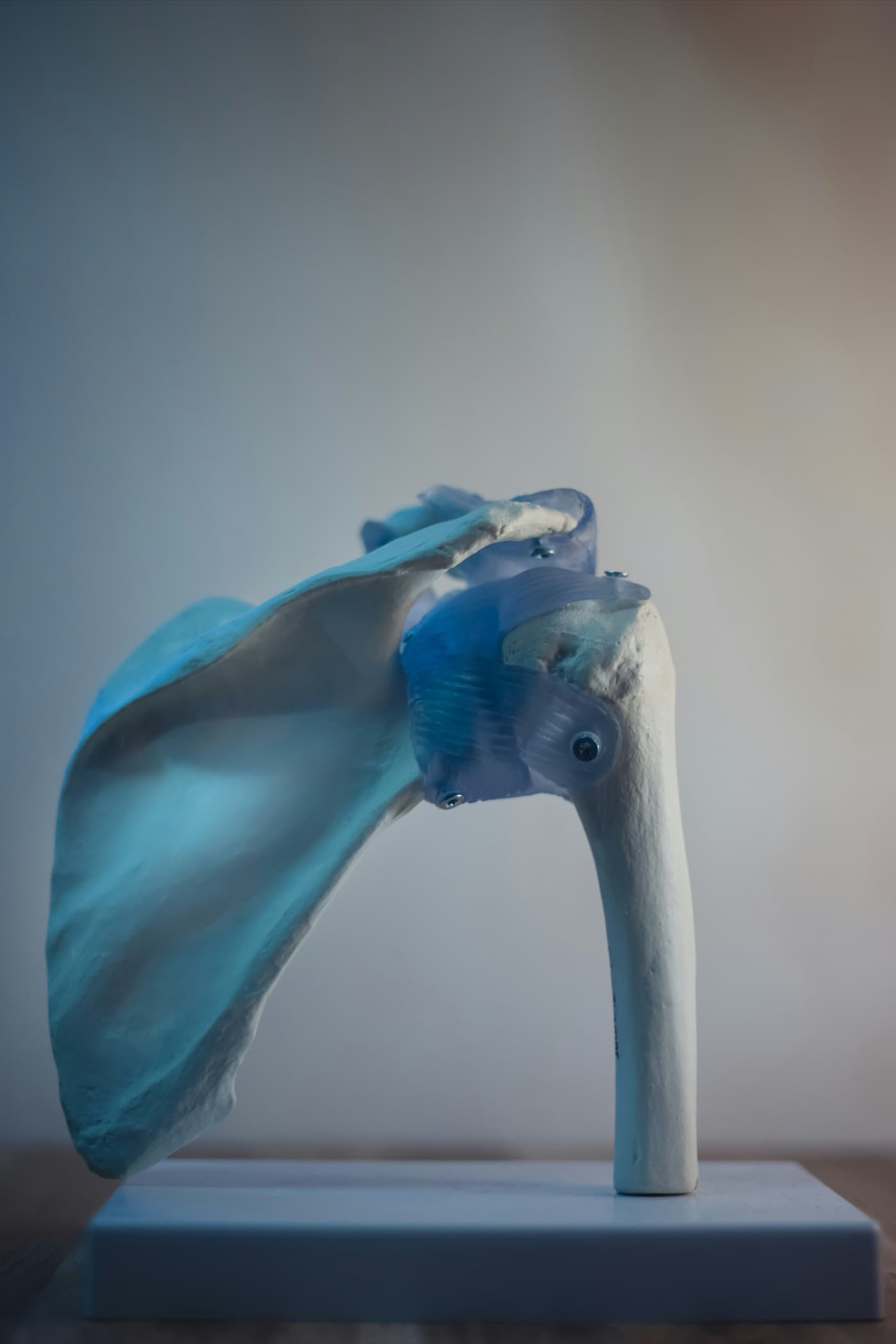
The shoulder is a ball-and-socket joint with an incredible range of motion. That freedom of movement comes with a tradeoff: it relies heavily on muscles, tendons, and ligaments to stay stable. When any of those structures get overloaded, irritated, or weakened, pain follows. Here are the conditions I see most often:
Rotator Cuff Problems
The rotator cuff is a group of four muscles and tendons that hold your shoulder in place and help it move. These tendons can get irritated from repetitive overhead movements (painting, swimming, throwing), age-related wear, or a sudden injury. Symptoms usually include pain on the side or front of your shoulder, weakness when lifting your arm, and pain at night when you roll onto that side.
Rotator cuff tears get a lot of attention, but here's something most people don't know: research shows that many rotator cuff tears can be treated successfully without surgery. [2] Physical therapy that focuses on strengthening the surrounding muscles and improving how the shoulder moves often produces excellent results.
Frozen Shoulder
Frozen shoulder (also called adhesive capsulitis) is exactly what it sounds like. Your shoulder gradually gets stiffer and stiffer until it feels locked. It typically goes through three stages: the "freezing" phase where pain increases and movement decreases, the "frozen" phase where pain may ease but stiffness peaks, and the "thawing" phase where motion slowly comes back.
Frozen shoulder is more common in women, people over 40, and those with diabetes. It can be frustrating because it takes time to resolve, but physical therapy can significantly speed up recovery and help you regain motion. [3] Manual therapy, gentle stretching, and specific exercises make a real difference.
Shoulder Impingement
Impingement happens when the tendons in your shoulder get pinched as you raise your arm. You might feel a sharp pain or catching sensation when reaching overhead or behind your back. It's common in people who do a lot of overhead work or sports, but it also shows up in desk workers with poor posture.
The good news is that impingement is one of the most treatable shoulder conditions. [4] It usually responds quickly to a combination of manual therapy to free up the joint and targeted strengthening to fix the muscle imbalances that caused the problem in the first place.
When Should You Get Help?
It's tempting to wait and see if shoulder pain goes away on its own. Sometimes it does. But there are clear signals that it's time to see a physical therapist:
- Pain that has lasted more than two weeks
- Difficulty reaching overhead or behind your back
- Pain that wakes you up at night
- Weakness in your arm that you didn't have before
- A clicking, popping, or catching feeling with movement
- Pain that's changing how you use your arm day to day
Waiting too long can make shoulder problems harder to treat. Muscles weaken, movement patterns change, and conditions like frozen shoulder can set in. Getting checked out early gives you the best shot at a quick recovery.
How I Treat Shoulder Pain at JointWorks PT
Every shoulder is different, so every treatment plan starts with a thorough evaluation. During your first visit, I'll assess your range of motion, strength, posture, and how your shoulder blade and spine are moving. This tells me where the problem is actually coming from, which isn't always where you feel the pain.
Hands-On Treatment
Manual therapy is a big part of how I treat shoulder pain. This includes joint mobilization to restore normal movement in the shoulder and the surrounding joints (your mid-back and neck play a bigger role in shoulder pain than most people realize). I also use soft tissue work to release tight muscles around the shoulder, chest, and upper back. When deep muscle tension is a factor, dry needling can provide fast relief that's hard to achieve with stretching alone.
Strengthening and Stability
Once we've addressed the pain and stiffness, the real work begins. I'll build you a specific exercise program that targets the muscles that need to get stronger. For most shoulder problems, this means rotator cuff strengthening, shoulder blade stability work, and exercises that improve how all the muscles around your shoulder work together. These exercises are simple, effective, and designed to fit into your daily routine.
Posture and Movement Training
Poor posture is a silent contributor to many shoulder problems. Rounded shoulders and a stiff mid-back change how your shoulder blade sits and moves, which puts extra stress on your rotator cuff and other structures. I'll help you identify and correct the postural habits that may be feeding your pain, whether it's how you sit at your desk, how you sleep, or how you move during exercise.
What a Treatment Session Looks Like
At JointWorks PT, every session is a full hour, one-on-one with me. Here's what a typical shoulder session includes:
- Check-in: We talk about how you're feeling, what's improved, and what's still bothering you.
- Hands-on work: I use manual therapy to improve joint motion and release tight tissue. If dry needling is appropriate, we'll do that too.
- Exercise: We work through your exercises together so I can make sure your form is right and adjust the program as you progress.
- Home plan: You'll leave with clear instructions on what to do between sessions to keep your progress moving forward.
Because every minute is dedicated to you, we accomplish more in each visit than what most clinics can do in two or three sessions. That's the advantage of one-on-one, cash-based care.
Do You Really Need Surgery?
This is one of the most important questions I help patients answer. The short version: probably not. Research consistently shows that physical therapy produces results equal to surgery for many shoulder conditions, including rotator cuff tears, impingement, and labral injuries. [5] And the benefits of trying PT first are significant:
- No surgical risks or complications
- No lengthy post-surgical recovery
- Lower overall cost
- You stay active throughout the process
If your shoulder does end up needing surgery down the road, the strength and mobility you build through PT will help you recover faster afterward. It's a win either way.
Most Shoulder Pain Is Fixable
A nagging ache, a stiff shoulder, pain that's been building for months: physical therapy can help with all of it. At JointWorks PT, I'll give you a clear diagnosis, a focused treatment plan, and the hands-on care to get your shoulder working again.
I offer free consultations at both my Northbridge (Bellator Fitness) and Ashland (Focus on Fitness) locations. If you're not sure whether PT is right for your shoulder, let's talk. There's no pressure, no commitment, just honest answers about what's going on and how to fix it.
References
- Steuri R et al. Effectiveness of conservative interventions including exercise, manual therapy, and medical management in adults with shoulder impingement: a systematic review and meta-analysis. PMID 31726927. PubMed
- Defined E et al. Conservative versus surgical management for patients with rotator cuff tears: a systematic review and meta-analysis. PMID 33419401. PubMed
- Challoumas D et al. The efficacy of physiotherapy interventions in the treatment of adhesive capsulitis: a systematic review. PMID 33185587. PubMed
- Hanratty CE et al. The effectiveness of physiotherapy exercises in subacromial impingement syndrome: a systematic review and meta-analysis. PMID 22607807. PubMed
- Longo UG et al. The effectiveness of surgical vs conservative interventions on pain and function in patients with shoulder impingement syndrome: a systematic review and meta-analysis. PMID 31141546. PubMed